

What is a powerflush, and how does it work?
Water and cleaning agents pushed round your heating at high flow but low pressure. The sludge comes out, the heat comes back.
Why heating systems get dirty
Over the years the water inside your radiators reacts with the steel, and rust builds up as black sludge called magnetite. It settles at the bottom, which is why a sludged radiator is warm at the top and cold at the bottom.
Left alone, it causes cold spots, slow heating and a boiler that has to work harder. Eventually it can lead to blocked pipes, failed pumps and expensive repairs. A powerflush removes it and gets heat back into every room.
See a powerflush in action
Real photos from our own jobs around East Kent, step by step. Floors are protected, hoses run tidily, and everything is cleared away when we’re done.
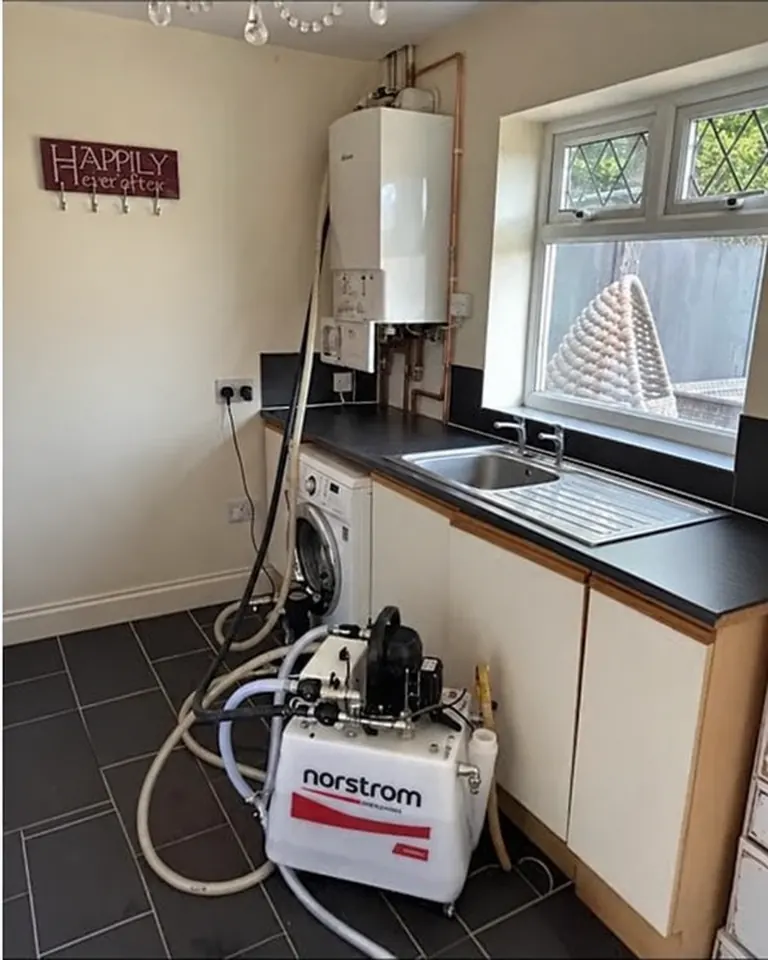 Step 1Machine connectedThe flushing machine is hooked up to the heating system.
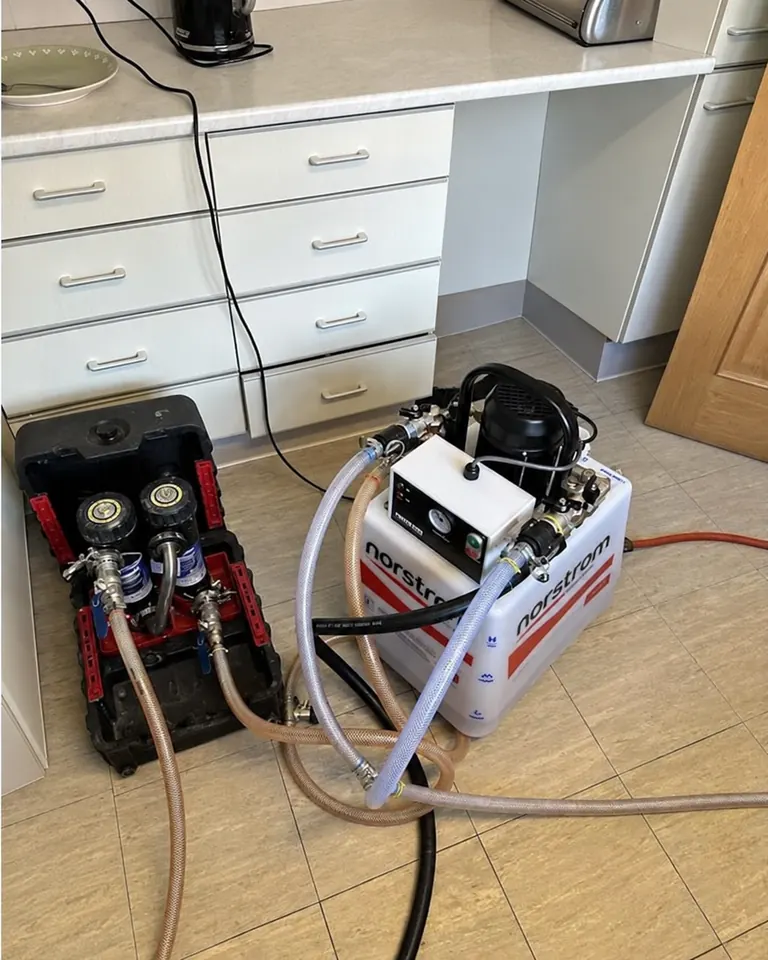 Step 2Chemicals circulatingCleaning chemical is pushed round every radiator and pipe.
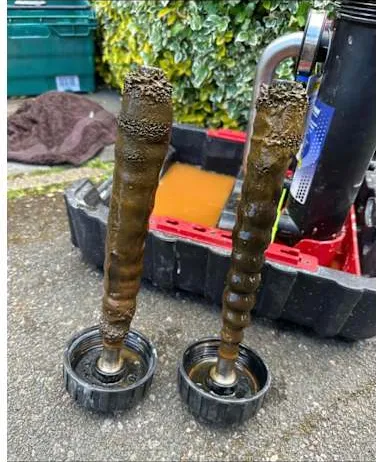 Step 3Magnet filter catching sludgeThe loosened sludge is caught on the magnets.
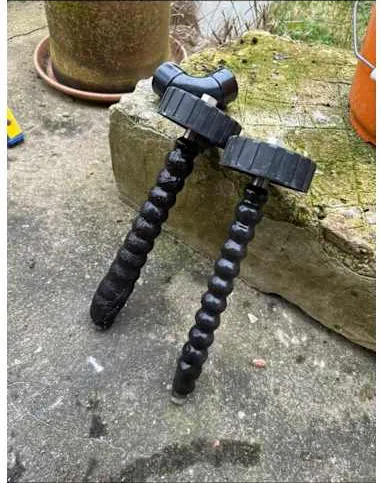 Step 4System flushed cleanClean rods, clean water, heat back in every room.
What happens on the day
Most homes are done in one day. You’ll need to be in, and the heating and hot water will be off for part of it.
We check your system first
Boiler, pipes, radiators and any tanks, plus a check for existing leaks.
The machine is connected
Hooked up at the pump or a radiator to push water round the whole circuit.
Cleaning chemical goes in
It loosens the sludge, rust and scale stuck inside the system.
Each radiator is flushed
One at a time, high flow and low pressure, with the flow reversed.
Dirty water out, clean water in
Flushed with fresh water until it runs clear.
The system is protected
Inhibitor goes in, and a magnetic filter is fitted or cleaned.
Test and hand over
Every radiator bled and checked hot, and we show you what came out.
How long does a powerflush take?
We use top-of-the-line professional powerflushing equipment, the best in the industry. That means we can complete a full home powerflush in a single day, leaving your system clean and clear. You’ll need to be in, and the heating and hot water will be off for part of the day.
Powerflush or chemical flush: what’s the difference?
A chemical flush adds a cleaner to the system and drains it through the boiler’s normal circulation. A powerflush uses a dedicated machine to push water and cleaner round at high flow, reversing the flow and flushing each radiator in turn, so far more of the settled sludge comes out. For a system with cold spots and black water, a powerflush is the thorough option.
How often does a system need a powerflush?
There’s no fixed schedule. It’s worth doing when the signs appear (cold spots, black water, a noisy boiler), and when a new boiler or radiators go in. With inhibitor topped up and a magnetic filter cleaned at each boiler service, a system stays clean far longer.
Is a powerflush right for your system?
Combi boilers
The most common setup. A powerflush clears the heating side, which helps the boiler run better. Hard-water scale on the hot-water side is a separate job, and we’ll tell you if that’s the issue.
System & regular boilers
Systems with a hot water cylinder, and older open-vented systems with tanks in the loft. We need to reach the tanks as well as the boiler and radiators.
New boiler going in?
Cleaning the system before a new boiler is fitted stops old sludge going straight into the new one. It’s good practice, and many manufacturers expect it.
Hot radiators. A protected boiler.
Tell us about your system in a minute and Pete will come back with a price.